Why small boats beat big charters for Wrangell Alaska group tours this season
Key Takeaways
Skip the mega-charter mindset — a small boat carrying a dozen or fewer people gets your group closer to whales, seals, and bear activity than a crowded upper deck ever will.
Match the trip to your group's stamina first: a half-day glacier run suits grandparents and toddlers better than a full river excursion through backcountry channels.
Ask about cabin coverage and bathroom access before you book — an open, unheated boat can ruin a wildlife tour fast when Southeast Alaska weather turns.
Build in buffer time around cruise schedules; a guided trip that adjusts for tides and wind beats a rigid itinerary that ignores local conditions.
Pack layers, not just a jacket — temperature swings between the dock and open water surprise most first-time visitors to this stretch of Alaska.
A local captain who reads tide charts and animal patterns daily will put your group in the right spot at the right time, something a national tour operator simply can't replicate.
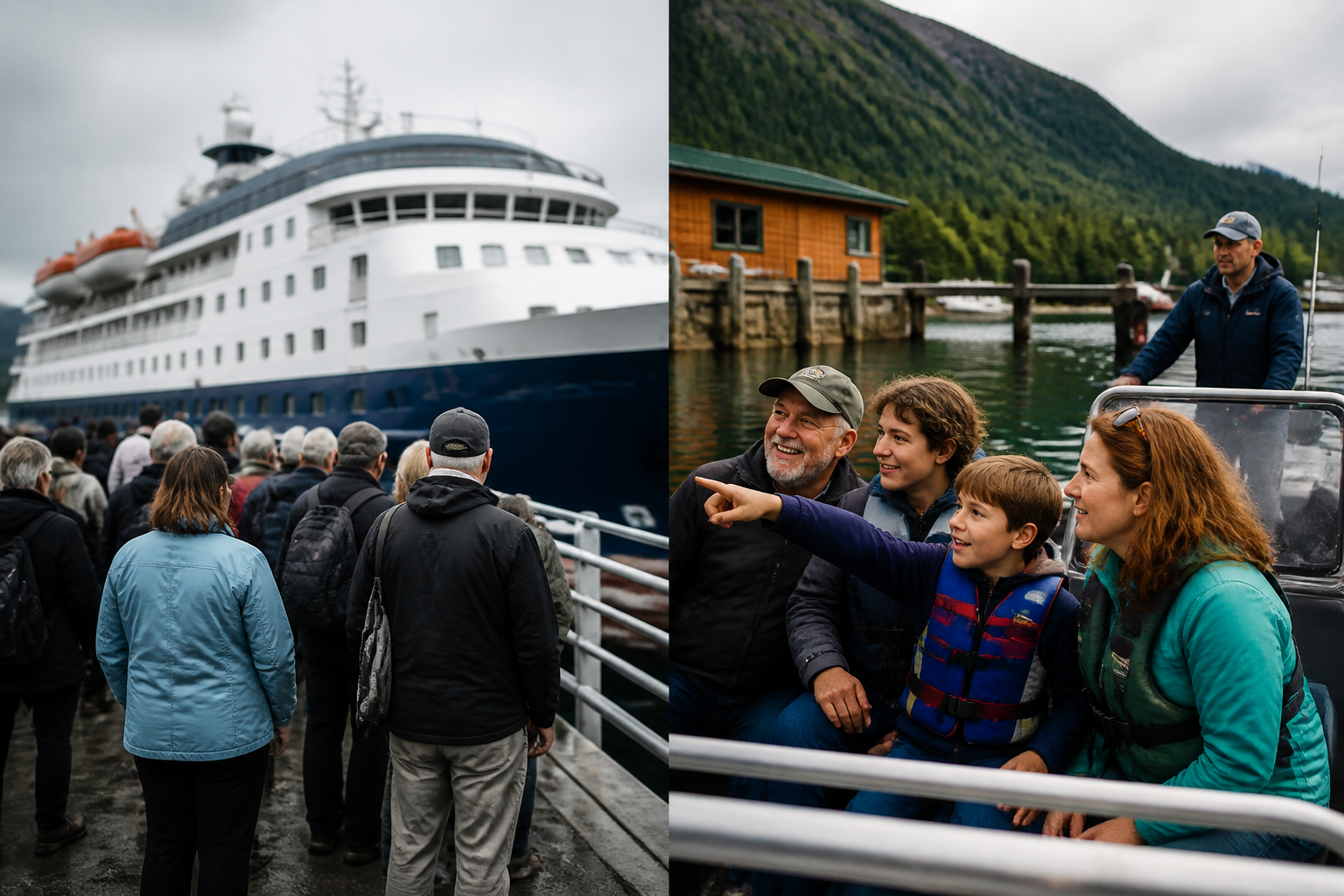
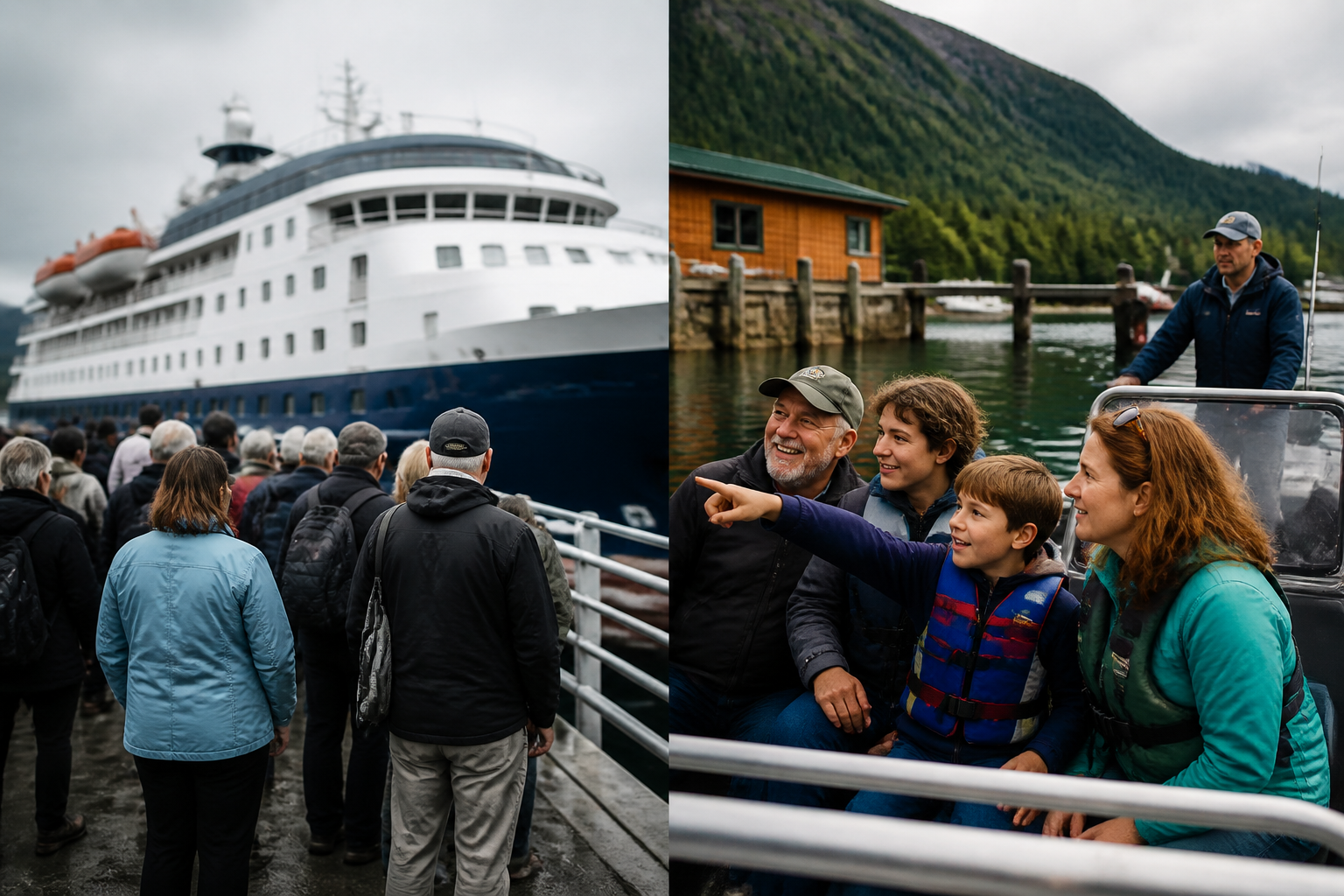
Twenty-two strangers, one railing — a humpback that surfaces on the wrong side of the boat. That's the reality on a lot of big charter outfits, and it's exactly why more families are rethinking what Wrangell Alaska group tours should actually look like this season.
A captain who's run these channels for decades will tell you straight: bigger isn't better once tides, weather, and a mixed-age group enter the picture. Grandpa needs a seat out of the wind. The teenagers want to see a bear close enough to remember it. The toddler needs a bathroom within ten minutes, not forty. Cram twenty-plus people onto one deck and somebody's always losing that trade-off.
Small boats change the math entirely. Fewer guests means better sightlines, quieter engines near wildlife, and a crew that can actually adjust the plan when the water or the animals don't cooperate. That flexibility is the whole difference between a memorable day on the water and one everybody's ready to forget.
The Problem with Cramming Multi-Generation Groups onto Big Charter Boats
Picture a 65-foot charter loaded with 40 strangers, three tour buses' worth of people, and one narrow rail everybody's fighting over. Grandpa's stuck in the middle row. The kids can't see past a wall of camera phones. A humpback surfaces off the port side, and half the boat misses it entirely because they're wedged in facing the wrong direction. That's the reality on a lot of big-charter operations this season, and it's exactly why more families are booking Wrangell Alaska Group Tours on smaller vessels instead.
Why Grandma and the Kids Both Lose on a Crowded Deck
Big boats move slowly to load — slower to reposition. When 40 people need a bathroom line, kids get antsy, and older guests get cold standing around waiting their turn. On a small guided boat, everybody's within a few feet of open water. No climbing over strangers. No missing the good side of the boat.
How Group Size Changes What Wildlife You Actually See
Wildlife doesn't stick around for a slow, noisy crowd. Seals dive. Eagles lift off. A captain running six to twenty guests can idle close, cut the engine, and let a family actually watch a moose feeding along the shoreline instead of catching a blur through a window.
What Makes a Small-Boat Wilderness Tour Work for Families
Bigger isn't better out here. A 30-person charter can't turn on a dime when a pod of whales shows up off the bow, and it sure can't slip into a shallow slough to watch moose feeding along the bank. Small boats can. That's the whole game with Wrangell Alaska group tours — nimble vessels, local captains, and routes that bend to what the water and wildlife are actually doing that day.
Covered, Heated Cabins vs. Open-Deck Discomfort
Southeast Alaska doesn't care about your itinerary. Rain sideways, wind that bites through a jacket — it happens fast. A covered, heated cabin means grandma stays warm — the toddler doesn't melt down two hours into a wildlife excursion. Open-deck charters look great in brochures. They're miserable in real weather.
Guided Flexibility: Adjusting the Route for Weather and Tides
Tides run the show on glacier trips through the Strait, and a good guide reads them like a road map. Small boats can reroute in minutes. Large charters, locked into fixed schedules, often can't.
Bathroom Access and Other Comfort Details Nobody Mentions Until It's Too Late
Ask before you book.
Not every boat has a bathroom onboard — and that detail matters more than any brochure photo once you're three hours into a trip with kids or older relatives.
Choosing the Right Adventure for Your Group's Stamina and Interests
What does your crew actually want out of this trip — ice, bears, or a river nobody else is running that week? That question matters more than any brochure, because a nine-year-old and a grandparent with bad knees don't belong on the same itinerary as two able-bodied hikers chasing a canyon view.
Glacier Sightseeing for Families Who Want Ice Without a Full-Day Commitment
A half-day run to see calving ice and floating bergs works well for mixed-age groups. Tides control the route and timing, not the clock, so a good guide adjusts the plan hour by hour rather than forcing a fixed schedule.
Guided Bear-Viewing Trips: Safety Rules Every Group Should Know Before Booking
Bear viewing is not a casual walk in the park. Groups need to know before booking: no food on the trail, strict guide-led spacing, and a firm minimum age recommendation — five years old — because unpredictable bear behavior around small children is a real risk, not a formality.
River Trips Through Backcountry Channels for Groups Wanting a Wilder Route
For groups craving a wilderness feel closer to overland backcountry travel than a typical sightseeing cruise, shallow-draft river routes push through channels a bigger charter simply can't reach. Eagles, waterfowl, and shifting gravel bars make it feel less like a tour and more like an actual expedition.
Planning Logistics So Your Whole Group Actually Enjoys the Day
Here's a number that surprises folks: nearly 6 out of 10 group bookings on the water get cut short or rerouted because nobody checked the tide tables or the ship's return window before signing up. That's not bad luck — that's bad planning. Wrangell runs on tide time, not clock time — a captain who ignores that will wreck your afternoon.
Matching Tour Length to Cruise Schedules and Kids' Patience
A 3.5-hour wildlife run works fine for most families. A 7-hour glacier-and-town combo? Great for grandparents with patience and teenagers with cameras, rough for a five-year-old who's done at hour two. Ask three questions before booking: How long is the boat ride itself? Is there a bathroom onboard? What's the backup plan if tides shift the route? Small groups get straight answers fast — no guessing, no committee vote required.
What to Pack for Southeast Alaska Weather Swings
Layers win, every time. Pack:
A waterproof jacket (not just water-resistant)
Warm gloves, even in July
Non-slip shoes for wet decks
Extra snacks — sea air burns calories fast
A dry bag for cameras and phones
Southeast Alaska can swing 20 degrees between morning fog and afternoon sun. Dress for the coldest hour, not the sunniest photo.
Why Local, Small-Group Guides Outperform National Tour Chains in Alaska
Here's a myth that needs busting: bigger boats mean better trips. They don't. A 100-passenger charter run by an out-of-state operator can't turn on a dime when a moose steps into a tidal slough or when a pod of harbor seals hauls out on a gravel bar. Southeast Alaska rewards patience — local memory, not fleet size.
The Value of a Captain Who Reads Tides and Wildlife Patterns Daily
A captain who's run these channels for years isn't guessing. They know which cove holds seals at low water, which slough backs up before a big tide, and where wildlife tends to feed depending on the season. That kind of knowledge doesn't come from a corporate training manual — it comes from thousands of hours on the same water. Ask any experienced guide, and they'll tell you: reading the tide chart is only half the job. The other half is remembering what happened last Tuesday when the water dropped two feet faster than expected.
Small Groups, Real Access: The Difference Between a Guided Excursion and a Mass Excursion
Small groups get closer looks, quieter approaches, and guides who actually answer questions instead of running a script. A boat carrying six to twenty guests can idle near a glacier face or ease toward a wildlife-rich shoreline without disturbing it. That's the real difference between a guided excursion built around a place and a mass excursion built around a schedule.
Frequently Asked Questions
What is the best excursion to take in Wrangell, Alaska?
Depends on what your group wants out of the day. If it's close-range bears you're after, a guided trip to a bear observatory in the Tongass is hard to beat — nothing else in the area gets you that near to feeding brown bears with a trained guide standing right there. If glaciers and icebergs are the goal, a half-day run out to see calving ice and floating bergs is the better call, especially for groups with grandparents or young kids who can't handle a full seven-hour day.
What is the best tour company for Alaska group tours in Wrangell?
Look for a locally owned operator with actual roots in town — not a franchise running the same script from Juneau to Skagway. The captains who grew up on these waters know which channel is passable at low tide and where wildlife has been showing up that week. Ask how long they've operated in Wrangell specifically, and ask about their boats' viewing decks and cabin comfort before booking.
What to do in Wrangell, Alaska from a cruise ship?
Wrangell's port stops are short, so plan around your all-aboard time first. A three-and-a-half-hour wildlife run or a half-day glacier trip both fit comfortably into a typical port day without cutting it close. Pick an operator whose office sits near the dock — it cuts down on wasted transit time — reduces the odds of a stressful sprint back to the ship.
Is Wrangell, Alaska worth visiting?
Yes, and it's underrated precisely because it doesn't get the cruise traffic that Juneau or Ketchikan does. You get quieter waters, fewer crowds at wildlife sites, and a river system (the Stikine) that most visitors to Southeast Alaska never see. For families wanting real wilderness without an overland safari-style production, it's one of the better small towns on the coast.
How big can a group tour get in Wrangell?
Most boats here run comfortably with groups from a handful of people up to around 20-plus passengers, depending on the vessel. Larger multi-generation families or reunion groups should book early and confirm boat size, since bigger catamarans handle more guests than smaller jet boats used for shallow river routes.
Do group tours in Wrangell run in bad weather?
Southeast Alaska weather changes fast — rain, wind, and choppy channels are normal, not exceptions. Reputable operators only cancel in genuinely extreme conditions and will call ahead if a route needs to shift. Dress in layers and expect some spray; a stable, covered boat handles rough water far better than an open skiff.
Are Wrangell group tours good for kids and older travelers?
Generally yes, with a few caveats. Wildlife and glacier boat trips work well for most ages since guests stay seated and covered. Bear-viewing trips involve a short walk on gravel and boardwalk and aren't recommended for infants or toddlers — check the minimum age before booking if young kids are in your group.
How far in advance should a group book a Wrangell tour?
Book at least a few weeks out for peak summer months, especially for bear-viewing spots, which only run July through August and cap trail numbers at a dozen people at a time. Larger groups splitting into two smaller parties should reserve even earlier to guarantee the same day and time.
What should groups pack for a day tour in Wrangell?
Layers, a real rain jacket, and closed-toe shoes are non-negotiable — this isn't a Yellowstone jeep excursion where you can duck into a heated vehicle. Bring a camera with a strap, snacks beyond what's provided, and cash or cards for anything extra. Skip cotton; it stays wet all day once the spray starts.
Can Wrangell tours be combined into a multi-day guided trip?
Absolutely — many groups pair a morning wildlife or river outing with an afternoon glacier run or a bear-viewing day later in the week. Southeast Alaska rewards a slower, multi-day approach rather than trying to cram everything into one excursion. Talk to your guide about spacing activities so no one in a mixed-age group ends up exhausted by day three.
Forty years on the water teaches you one thing above all: the boat you pick decides the trip you get. Cram three generations onto a fifty-seat deck and you'll get a lukewarm story about a smudge on the horizon that might've been a whale. Put that same family on a smaller hull with a captain who's watched these tides since childhood, and grandma gets a seat out of the wind while the kids get close enough to hear a sea lion bark. That's the real math behind Wrangell Alaska group tours this season — fewer seats, better access, and a guide who adjusts the whole day around your group instead of a fixed script.
Weather will shift. Tides will move the glacier route an hour either direction. A good small-boat operator plans for that instead of apologizing for it. So before you lock in dates, figure out your group's actual stamina — cold tolerance, walking distance, patience for a long ride — and book a boat sized to match it, not the other way around. That decision alone will shape whether your family remembers Alaska as stunning or just long.