How to plan a hoonah excursions tour around a short cruise port stop
Four hours. That’s what most cruise passengers get once the gangway drops, and it’s barely enough time to grab a coffee, let alone see a brown bear in the wild. But it can be done — and it’s done right almost every day here on Chichagof Island. Planning a Hoonah excursions tour around a short port stop isn’t about luck. It’s about math, timing, and knowing which roads actually lead somewhere worth seeing.
I’ve been guiding these back roads long enough to know exactly how many minutes a group needs to spot deer near the muskeg, watch eagles work the shoreline, and still make it back with time to spare. Rushed tourists make for bad photos and worse memories. So before you book anything, you need to understand how the clock actually works on a working Alaska port day — and what a two-hour or three-hour tour really buys you once you leave the dock behind.
Why Timing Matters More Than the Tour Itself
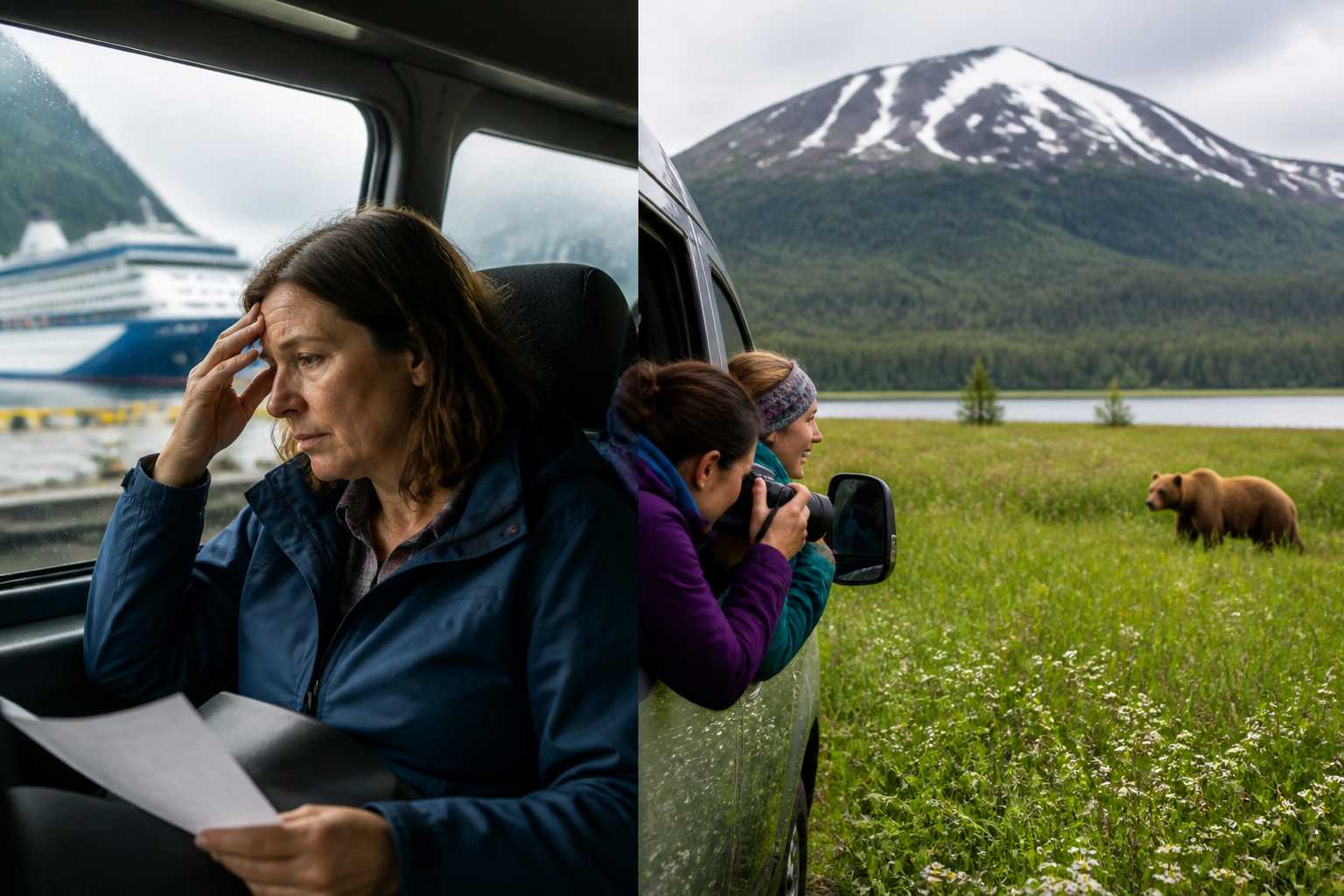
A woman I guided last July stepped off a tender boat at 11:15 with an all-aboard time of 3:30. She figured that left plenty of room. It didn’t — not once you count walking time, van loading, and the drive back through the village. Here’s what most people miss: the tour content matters less than the math you do before you ever book it. Pick the wrong window, and you’ll spend the whole ride watching the clock instead of watching for bears.
Counting Backward From Your Ship’s All-Aboard Time
Start with the ship’s all-aboard time, then work backward. Give yourself 45 minutes of buffer before that time closes — not 15, not 20. A well-run Hoonah Excursions Tour factors return drive time and drop-off walking into the schedule, but tides, wildlife stops, and foot traffic near the dock can eat minutes fast.
What a Four-Hour Port Stop Actually Allows
Realistically, a four-hour stop leaves about two and a half usable hours once you subtract disembarking, walking to the meeting point, and boarding time. That’s enough for a shorter guided route through old-growth forest and coastline — not a leisurely, four-stop journey. Book the tour length that matches your actual window, not the one that sounds best on paper.
Choosing Between a Two-Hour and Three-Hour Land Excursion
More time on the road means more chances at bears. That’s the blunt truth of it. A three-hour outing gets you deeper into the back roads of Chichagof Island, past salmon streams and old-growth stands where wildlife actually shows up — not just the spots closest to the dock. Two hours works fine if your ship’s in port for four hours total — you’re trading distance for time. Simple as that.
Matching Tour Length to Your Group’s Energy and Age Range
Grandparents with limited stamina? The shorter option keeps everyone comfortable without cutting corners on the story or the scenery. Families with restless kids under ten tend to do better with the condensed version too — attention spans only stretch so far, even with bears in the mix. Groups of serious wildlife watchers, though, almost always ask for the longer route. More stops, more patience, more payoff.
What You Give Up (and Gain) With the Shorter Option
You’ll skip a few of the remote overlooks — maybe one berry-picking stop, depending on the season. What you gain is flexibility — a tighter schedule that still leaves buffer time before boarding. Here’s what most people miss: a shorter local excursion still beats a rushed, oversized bus tour. It’s not about square footage covered. It’s about who’s guiding you and what they know.
What Happens on the Road Once You Leave the Dock
Ever wonder what’s actually down those gravel roads past the cannery buildings? Once the van clears the last building near the water, the pavement runs out fast — that’s where things get interesting. No stoplights, no crowds, just old-growth spruce and hemlock pressing in on both sides. A good chunk of any Hoonah excursion tour happens right here, on roads the Forest Service built decades ago for logging, now used mostly by guides who know every bend.
Wildlife Viewing Along Chichagof Island’s Back Roads
This island holds more brown bears per square mile than almost anywhere on earth. Guides slow down near creek crossings during salmon runs, scan muskeg clearings for deer — point out eagles perched over the water. Sightings aren’t guaranteed — nobody honest will tell you otherwise — but the odds here beat most of Alaska by a wide margin.
Village Stops, Storytelling, and Cultural Context
The route also runs through the village itself. Guides — most of them lifelong residents — talk about growing up here, harvesting berries, learning which plants heal what. It’s not a scripted stop. It’s family history, told by the people who lived it.
Booking Smart So You’re Never Rushed at the Gangway
Here’s a number that surprises most first-time cruisers: 24 hours. That’s the minimum notice most reputable operators on this island need to lock in a van seat, and cutting it closer than that is how folks end up standing at the dock with no ride. My family’s run trips out here for 28 years, and the guests who plan ahead are the ones smiling at the end. The ones who don’t — well, they’re usually the ones asking if there’s room for one more, five minutes before departure.
Advance Notice, Weather Calls, and Backup Plans
Southeast Alaska weather doesn’t care about your itinerary. Rain, fog, wind — it shifts fast. Book early, but stay flexible. A good local guide will tell you straight if conditions call for a modified route rather than cancel outright. Ask about backup plans before you pay. That one question separates a company that respects your time from one that leaves you guessing.
Getting From the Ship to the Meeting Point Without Guesswork
Don’t wander. Walk straight through the terminal building, follow the signs, and you’ll reach the pickup area in a few minutes on foot — no map, no app needed. Confirm your exact meeting spot the night before. It’s a small step, but it’s the difference between a relaxed morning and a jog through the crowd.
Four hours ashore sounds tight until you break it down on paper — dock time, drive time, buffer time. That’s the whole trick to a good Hoonah excursions tour: work backward from the ship’s horn, not forward from wishful thinking. Pick the two-hour option if your group tires easily or the ship’s clock is unforgiving. Pick the three-hour version if you want real time along the back roads, where bears show up on their own schedule and the forest doesn’t rush for anyone.
What sticks with people isn’t the mileage covered. It’s a guide pointing out a berry bush his grandmother used for medicine, or a bear crossing a creek fifty yards off. That’s the kind of thing you can’t get from a bus window on a schedule built for forty strangers.
So book early, confirm your pickup point before you ever step off the ship, and give the road a chance to surprise you. A well-planned Hoonah excursions tour rewards travelers who plan ahead — call and lock in your date now, while the good time slots are still open.